
Floating markets and coconut groves make the Mekong Delta look timeless, but its story is anything but quiet. Roman coins buried in the mud, a lost kingdom, Chinese exiles, river battles and French rice barons all left their mark. This short guide to Mekong Delta history covers 2,000 years in ten minutes, and shows you where to see that history on your trip.
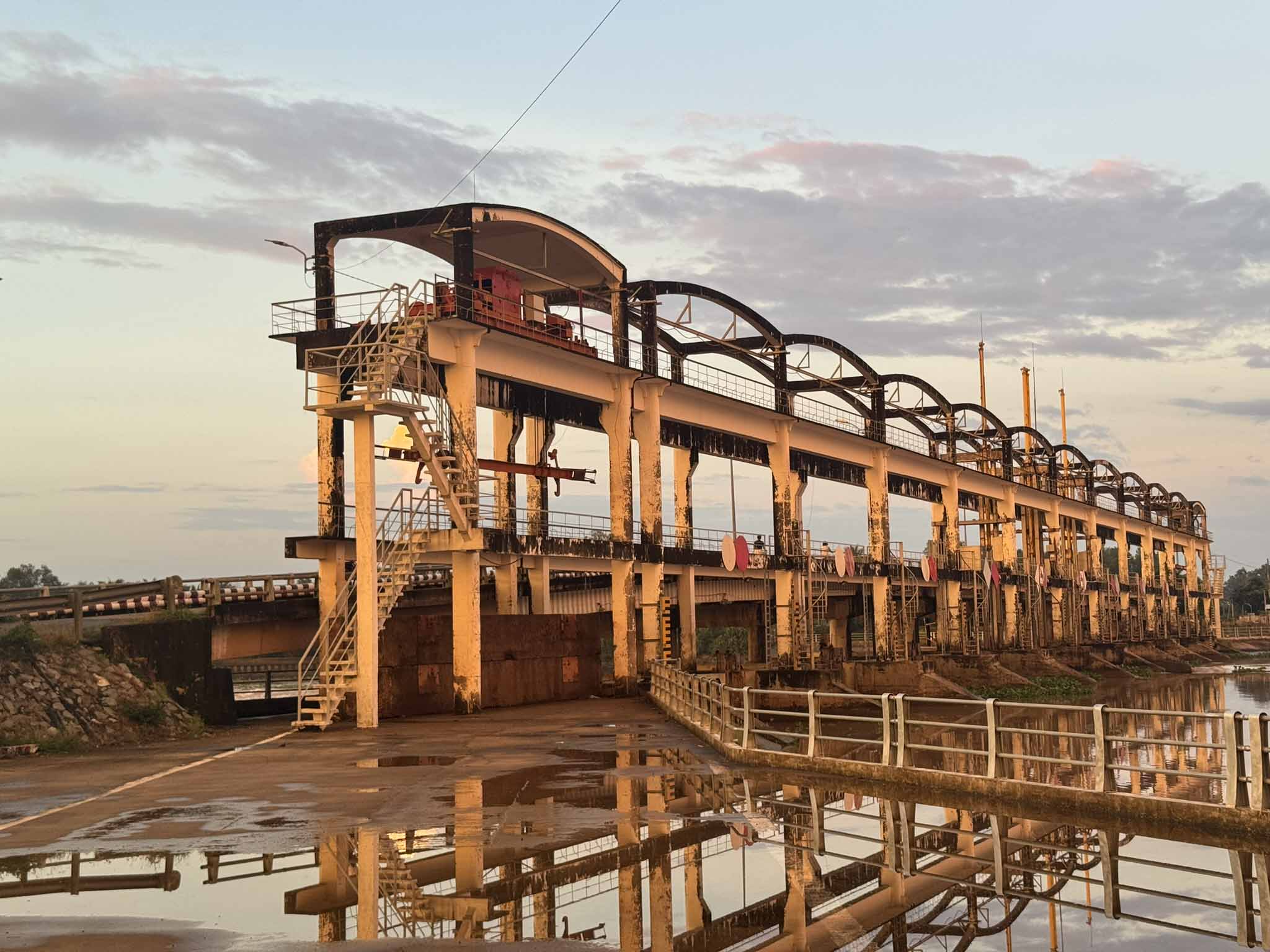
Funan and Óc Eo: a global port 2,000 years ago (1st to 6th century)
Mekong Delta history begins long before Vietnam or Cambodia existed, when the region was the heart of Funan, one of the earliest kingdoms in Southeast Asia. Its great port, Óc Eo, in today’s An Giang, sat on a sea route linking India and China.
Archaeologists have found Indian beads, Chinese bronze mirrors and even a gold Roman coin from the reign of Emperor Antoninus Pius at the site. In other words, the muddy fields of the Mekong were once part of a trade network that reached the Mediterranean.
The Khmer era (7th to 17th century)
Funan was eventually absorbed by Chenla, the forerunner of the Khmer Empire that later built Angkor. For roughly a thousand years of Mekong Delta history, the region was part of the Khmer world, sparsely populated and covered in swamp and forest. The Khmer still call it Kampuchea Krom, “Lower Cambodia”, and the settlement of Prey Nokor stood near where Saigon is today.

Vietnamese pioneers and Chinese exiles (17th to 18th century)
From the 1600s, Vietnamese migrants moved south under the Nguyễn lords, clearing land and digging canals. In 1679, around 3,000 Ming loyalists who refused to serve China’s new Qing dynasty arrived by sea. The Nguyễn lord let them settle: one group under Dương Ngạn Địch founded a trading town at Mỹ Tho, another under Trần Thượng Xuyên settled near today’s Biên Hòa.
Around the same time, a Chinese adventurer named Mạc Cửu built the port of Hà Tiên on the Gulf of Thailand. In 1698, the Nguyễn court formally organized the region around Gia Định (Saigon), and Vietnamese control spread across the Delta over the following decades.
The river battle of Rạch Gầm – Xoài Mút (1785)
In January 1785, a Siamese fleet sailed up the Tiền River to attack the Tây Sơn rebels. Nguyễn Huệ, one of Vietnam’s greatest generals, hid his boats along the riverbanks between Rạch Gầm and Xoài Mút, near Mỹ Tho, and ambushed them. The Siamese fleet was destroyed, and the battle is still celebrated as one of the most brilliant victories in Vietnamese history.
French Cochinchina and the rice boom (1862 to 1945)
France seized three eastern provinces of the South in the 1862 Treaty of Saigon, then the western provinces in 1867, creating the colony of Cochinchina. The French dug huge canals, turning swamp into rice fields. Rice exports boomed through the mills of Chợ Lớn, and wealthy landowners built grand houses, while most farmers worked as tenants.
One of those houses, the Bình Thủy ancient house in Can Tho, built in 1870, mixes French, Chinese and Vietnamese styles and appeared in the film The Lover (L’Amant). You can visit it on our Can Tho tour from Ho Chi Minh City.
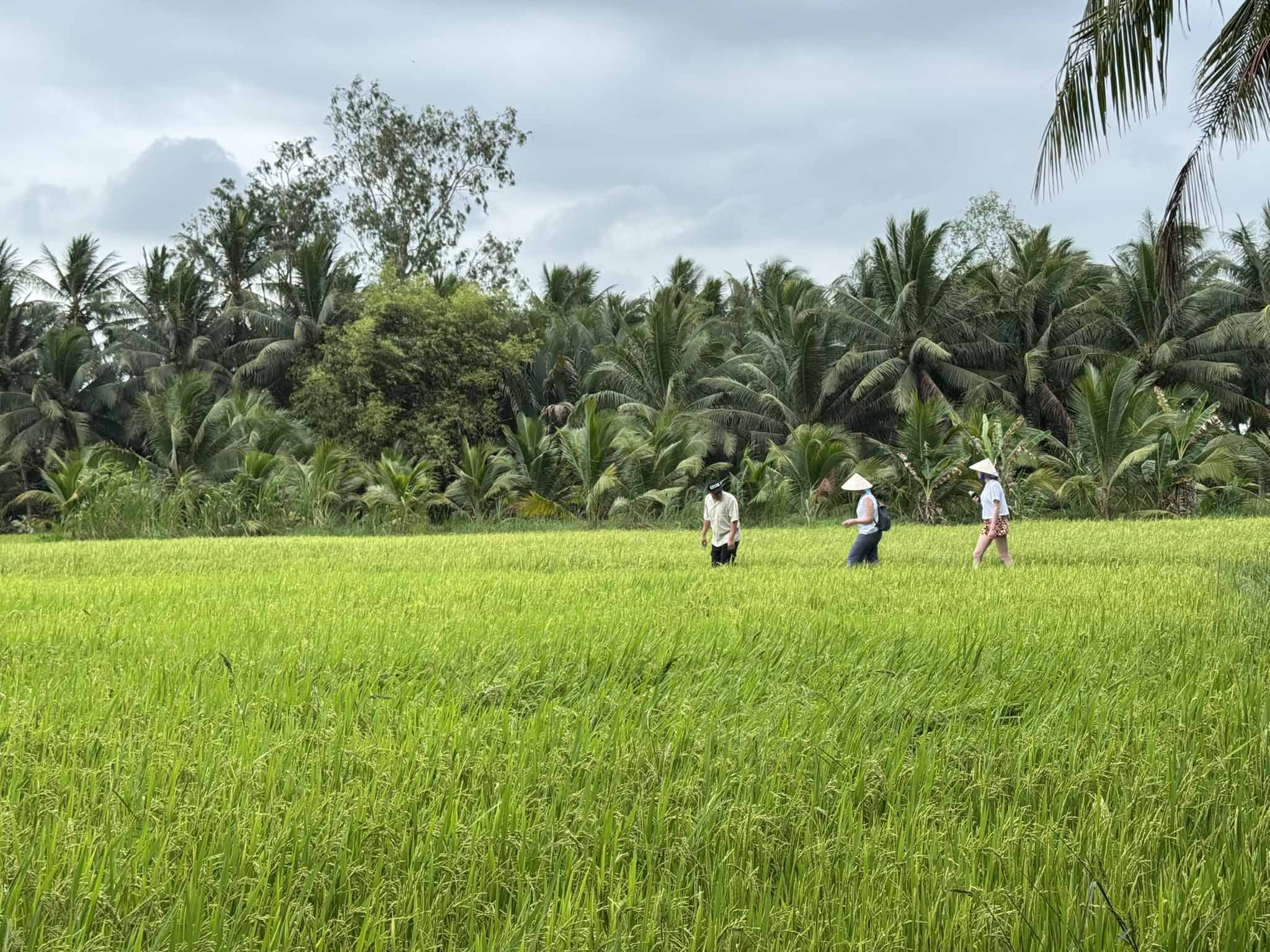
The 20th century: war on the waterways
In 20th-century Mekong Delta history, the region’s rivers and rice fields became battlefields during the wars of the 20th century. In 1960, the Đồng Khởi uprising began in Bến Tre. In January 1963, the Battle of Ấp Bắc near Mỹ Tho became a turning point in the conflict. Later in the decade, American and South Vietnamese riverine forces patrolled the canals by boat. For the city side of that story, see our Vietnam War tour in Saigon.
Modern Mekong Delta history
The latest chapter of Mekong Delta history is about bridges and roads. Since the 1990s, bridges have replaced many ferries. The Mỹ Thuận Bridge opened in 2000 and the Cần Thơ Bridge in 2010, and new expressways now link the Delta to Ho Chi Minh City in a few hours. Today the region faces new challenges: saltwater intrusion, sinking land and changes to the river’s flow from dams upstream.
Where to see Mekong Delta history today
- Óc Eo archaeological site (An Giang): the remains of Funan’s ancient port.
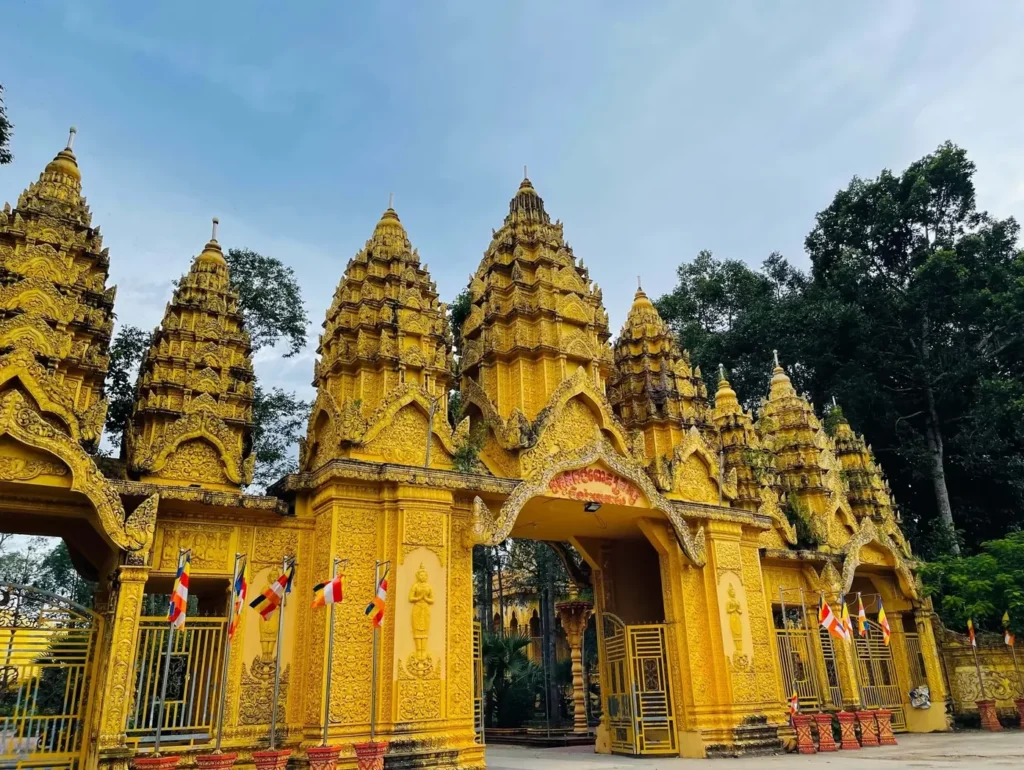
- Khmer pagodas in Tra Vinh and Soc Trang, some founded centuries ago.
- Ao Bà Om (Tra Vinh): a sacred Khmer pond full of legends.
- Chinese assembly halls in Tra Vinh, Can Tho and Mỹ Tho.
- Bình Thủy ancient house (Can Tho): a colonial-era family home.
- Rạch Gầm – Xoài Mút monument (near Mỹ Tho): site of the 1785 river battle.
Our 3 day Mekong Delta tour visits Ao Bà Om, a historic Chinese assembly hall and a Khmer temple founded in the 15th century, with a guide who brings the stories to life.
Mekong Delta history FAQs
Who lived in the Mekong Delta first?
The kingdom of Funan flourished here from around the 1st century, followed by the Khmer. Vietnamese settlers arrived in large numbers from the 17th century.
What was Óc Eo?
Óc Eo was Funan’s main port, where archaeologists have found goods from India, China and even Rome. It is one of the most important sites in Mekong Delta history.
When did the Mekong Delta become part of Vietnam?
Vietnamese control expanded gradually from the late 17th century and covered most of the Delta by the mid-18th century.
Can I learn about Mekong Delta history on a tour?
Yes. A good local guide turns pagodas, old houses and riverbanks into stories. Our Mekong Delta tours in Tra Vinh and Can Tho include historic temples, assembly halls and colonial-era homes.
Keep exploring: Mekong Delta culture, the people of the Mekong Delta and our Mekong Delta travel guide. For more detail, read about Funan on Wikipedia.
Keep reading: ready to see it in person? Start with Is the Mekong Delta worth visiting? or compare it with the war-history trip in Cu Chi Tunnels or Mekong Delta?
Pingback: Mekong Delta Travel Guide: 12 Best Hidden Experiences