Quick facts: Ok Om Bok is the Khmer “moon worship” festival, held on the full moon of the tenth lunar month. In 2026 that lands on the night of 24 November, with celebrations around 23 to 25 November in Tra Vinh, in Vietnam’s Mekong Delta. Expect moon offerings, floating lanterns, Ngo boat races and a lot of very good food. Local organizers sometimes adjust the program, so confirm details closer to the date.
So what is Ok Om Bok?
Ok Om Bok is a Khmer festival of gratitude. People gather at night, when the moon is at its fullest, to thank the Moon God for the harvest and ask for good weather and healthy crops in the year ahead. The name roughly means “offering of flattened rice”, because the offering table is piled with flattened young rice (com dep), coconuts, sweet potatoes and fruit from the season’s harvest.
It is celebrated by Khmer communities across the Mekong Delta, including in Soc Trang and Tra Vinh, and it is one of the three biggest holidays in the Khmer calendar alongside Chol Chnam Thmay (Khmer New Year) and Sene Dolta (ancestors’ festival). Tra Vinh is often considered the heart of the celebration because of its large Khmer population and its dense network of pagodas.
If you’ve ever been to a place where a festival is for the community first and tourists second, you know the feeling. Ok Om Bok is exactly that. You are a guest at somebody’s family gathering that happens to have a few thousand people.
When is Ok Om Bok in 2026?
The festival follows the lunar calendar, so the date moves every year. The full moon of the tenth lunar month falls on 24 November 2026, which means the main moon-worship ritual happens on the night of the 24th, with festivities and events usually spread over two or three days around it. The Ngo boat race, one of the highlights, is typically held on the following day.
Local authorities often publish the official schedule only a few weeks before. If you are planning a trip, arrive in Tra Vinh by the 23rd to catch the build-up, the lanterns and the street food, and keep the 25th free for the boat racing. We will update this article as soon as the 2026 program is confirmed.
What happens during the festival
The moon worship ceremony
This is the heart of it. As the moon rises, families gather in front of their homes, pagodas and in the public festival area. Tables are set under the sky with offerings: flattened rice, fruit, sweet potatoes, coconuts and sweets. Elders lead prayers, and children are given the flattened rice mixed with coconut milk and sugar. Kids are then quietly asked what they wish for, and elders listen and answer (a lovely tradition: the answers are usually about health, school and the harvest). It is quiet, gentle and quite moving even if you don’t understand the words.
Floating lanterns and lamps on the water
After dark, small lanterns drift down the river and many people release paper lanterns into the sky. It is a beautiful sight, with warm light on black water, especially if you find a good spot away from the crowd on the riverbank.
The Ngo boat race
The Ngo is a long, narrow wooden boat carved from a single tree trunk, and crews of 40 or more rowers paddle in rhythm to the roar of the crowd. The race is loud, competitive and surprisingly dramatic. Teams train for months, and local pride is on the line. If you like to see people throw everything into something they care about, this is the stuff.
Food, music and folk performances
Around the festival grounds you will find food stalls with Khmer dishes, grilled river fish, noodle soups, sweets and fruit. Folk dances and traditional music performances take place on stage, and the atmosphere stays friendly and relaxed late into the night.
Where to go: Tra Vinh, Soc Trang or somewhere else?
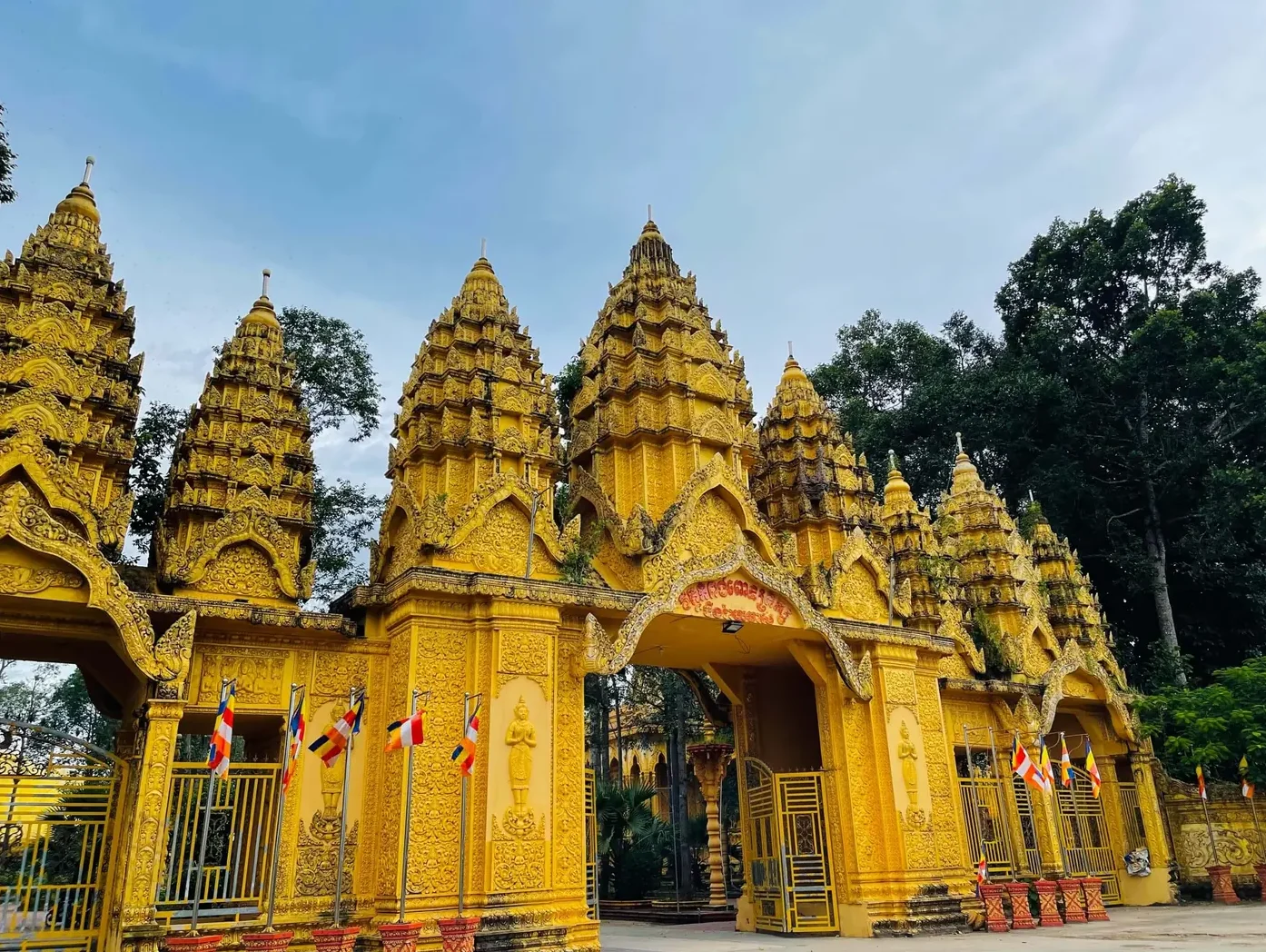
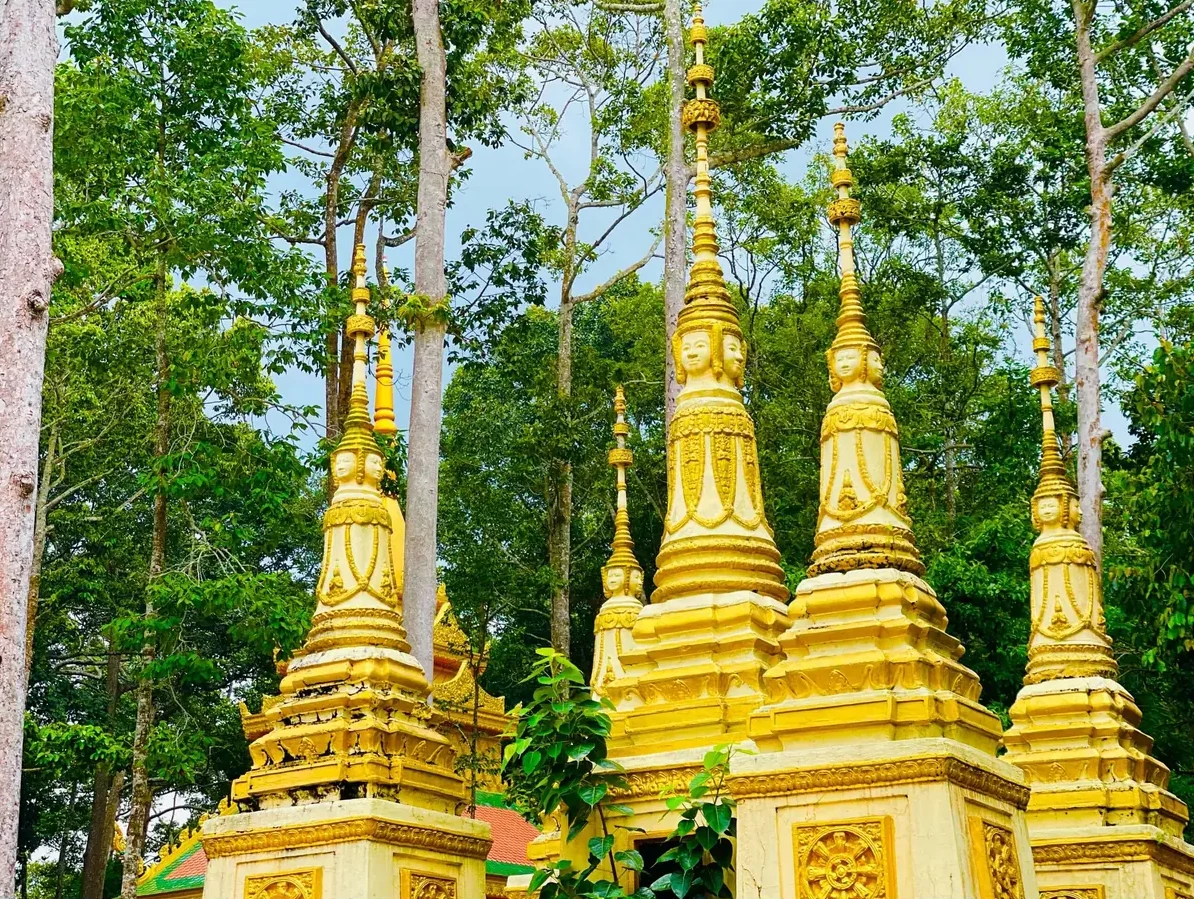
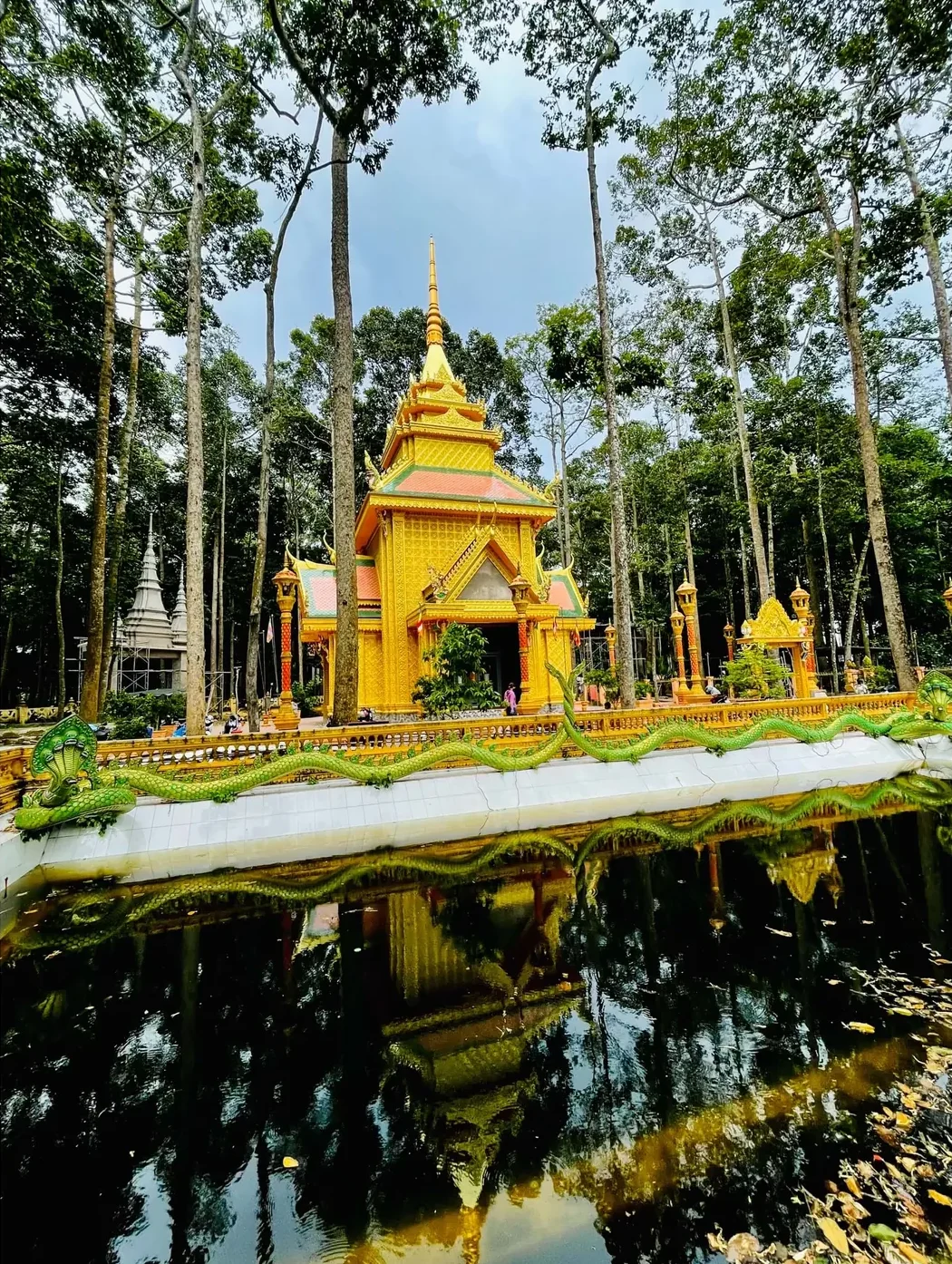
The main festivals happen in both Soc Trang and Tra Vinh, along with smaller local celebrations in many Khmer villages. We lean towards Tra Vinh for a few reasons. It is quieter and less commercial than the biggest tourist spots. Khmer pagodas with golden roofs and ornate gates are scattered across the countryside, and the province has a gentle, easy-going rhythm. You can combine the festival with village walks, monk blessings and long meals in family homes.
If you’ve seen a picture of a golden temple gate framed by palm trees and wondered where it was, there’s a decent chance it was in Tra Vinh.
How to get to Tra Vinh from Ho Chi Minh City
Tra Vinh is about 200 km south of Saigon, roughly 3.5 to 4 hours by road depending on traffic. Options include:
- Private car or tour: Easiest, especially during festival days when roads are busy. A guide also helps with where to stand and what to say.
- Intercity bus: Frequent buses leave from Saigon’s Mien Tay bus station. Cheaper but slower, and you’ll need local transport once you arrive.
- Motorbike: Only if you are an experienced rider; the highway can be stressful and festival nights are crowded.
We strongly suggest staying overnight. The evening ceremonies run late, and the drive back to Saigon at night is neither fun nor recommended after a day on your feet.
A sample two-day plan
Day 1: Leave Saigon in the morning, stop for coffee and a short walk in the countryside, arrive in Tra Vinh for lunch. Visit a Khmer pagoda and chat with monks (they often welcome questions). Walk through a village, meet a family and, if possible, join the preparation of the offerings. In the evening, go to the festival grounds for the moon ceremony and lanterns.
Day 2: Sleep in, have a slow breakfast, then watch the Ngo boat race or visit another pagoda and local market. Head back to Saigon in the afternoon.
That is basically the structure of our 2-day, 1-night Tra Vinh tour, which focuses on hidden villages and Khmer culture with a local guide. If you want more time to slow down, our 3-day village stay adds a night with a local family. For the exact festival dates, message us before booking so we can line up the trip with the official program. New to the region? Start with is the Mekong Delta worth visiting.
Is Ok Om Bok worth traveling for?
If you like cultural festivals, quiet rituals, photography and meeting people, yes, it’s one of the most authentic things you can do in southern Vietnam. If you are expecting a giant, polished spectacle with grandstands and fireworks, you may be underwhelmed. This is a community celebration, and its charm is in the small moments: a grandmother arranging fruit on a tray, kids giggling over sweet rice, the sound of drums over the river.
It is also a great chance to see a side of Vietnam that most visitors never find. Even if you miss the exact dates, Khmer villages in Tra Vinh are worth visiting at any time of year.
Etiquette: how to be a good guest
- Dress modestly when visiting pagodas: cover your shoulders and knees, and take off your shoes and hat before entering the main hall.
- Ask before photographing people, especially monks and elders. A smile and a gesture go a long way.
- Don’t touch offerings, and do not step over them.
- Don’t point your feet at altars, Buddha statues or monks when sitting.
- Women should not touch monks, including handing items directly; place them down or pass via a man.
- Bring small cash for donations, food and drinks.
- Stay for the quiet moments. Not everything needs a photo.
What to pack
Light, breathable clothes, a scarf or shawl, comfortable shoes you can slip off, a hat, sunscreen, mosquito repellent (the river does attract them at night), a small flashlight or phone light, a power bank, and a thin jacket in case the evening breeze picks up.
Book early
Hotels and homestays in Tra Vinh fill up during festival weekends, and local transport gets stretched. If you are thinking of going, book your accommodation and transport as soon as you can. If you’d like us to arrange the whole thing, message us on WhatsApp and we’ll help you plan.
Frequently asked questions
When is the Ok Om Bok festival in 2026?
The main moon-worship night is on 24 November 2026 (the full moon of the tenth lunar month), with celebrations around 23 to 25 November. Confirm the official schedule closer to the date.
Where is Ok Om Bok celebrated?
Mainly in Khmer communities of the Mekong Delta, especially Tra Vinh and Soc Trang.
What does Ok Om Bok mean?
It roughly means “offering of flattened rice” in Khmer, and the festival honors the Moon God and gives thanks for the harvest.
What is the Ngo boat race?
A traditional race of long, narrow wooden boats carved from a single tree trunk, rowed by crews of dozens of people.
Can tourists attend Ok Om Bok?
Yes. Visitors are welcome if they are respectful. Dress modestly at pagodas and ask before taking photos of people.
How far is Tra Vinh from Ho Chi Minh City?
About 200 km, roughly 3.5 to 4 hours by road.
Should I stay overnight for the festival?
Yes. Ceremonies run into the evening, and an overnight stay is safer and far more enjoyable than a long night drive back.
Last updated: October 2026. Written by the Trip Chip Travel team, a local guiding startup based in Ho Chi Minh City.