Ask a Vietnamese person to describe the South, and they will probably smile and talk about the people of the Mekong: generous, easy-going, always ready to pour you another glass. Mekong Delta culture grew out of rivers, rice and centuries of different peoples living side by side, and it feels very different from Hanoi or even Saigon.
Here are 9 fascinating traditions that make the Delta unique, and how you can experience them respectfully on your trip.
A melting pot of four cultures
The Delta is shared by four main communities: the Kinh (ethnic Vietnamese), the Khmer, whose ancestors lived here long before Vietnamese settlers arrived, the Hoa (ethnic Chinese) and the Cham. You can see all four in a single town: a Khmer pagoda, a Chinese assembly hall, a Vietnamese communal house and, in places like Chau Doc, a mosque.
9 Mekong Delta traditions worth knowing
1. A life shaped by the river
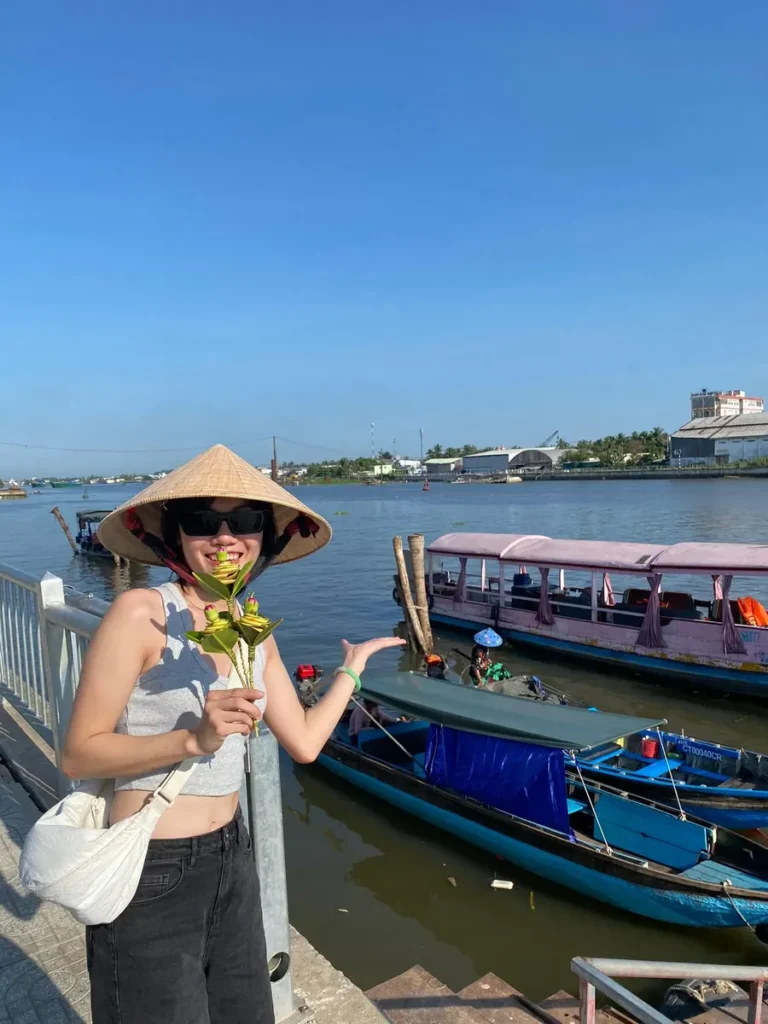
For centuries, rivers and canals were the Delta’s roads. Houses face the water, children learn to row before they ride bicycles, and markets float. At floating markets, vendors tie a sample of their goods to a tall bamboo pole called a cây bẹo so buyers can spot what they sell from far away.
2. Khmer pagodas at the heart of the village
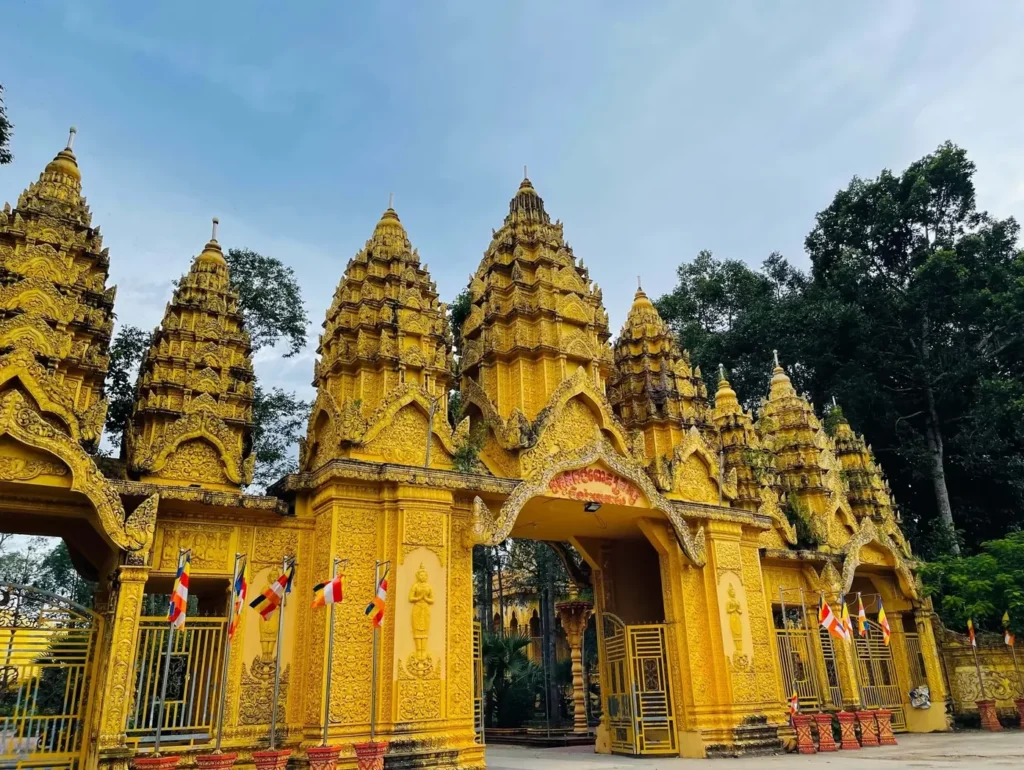
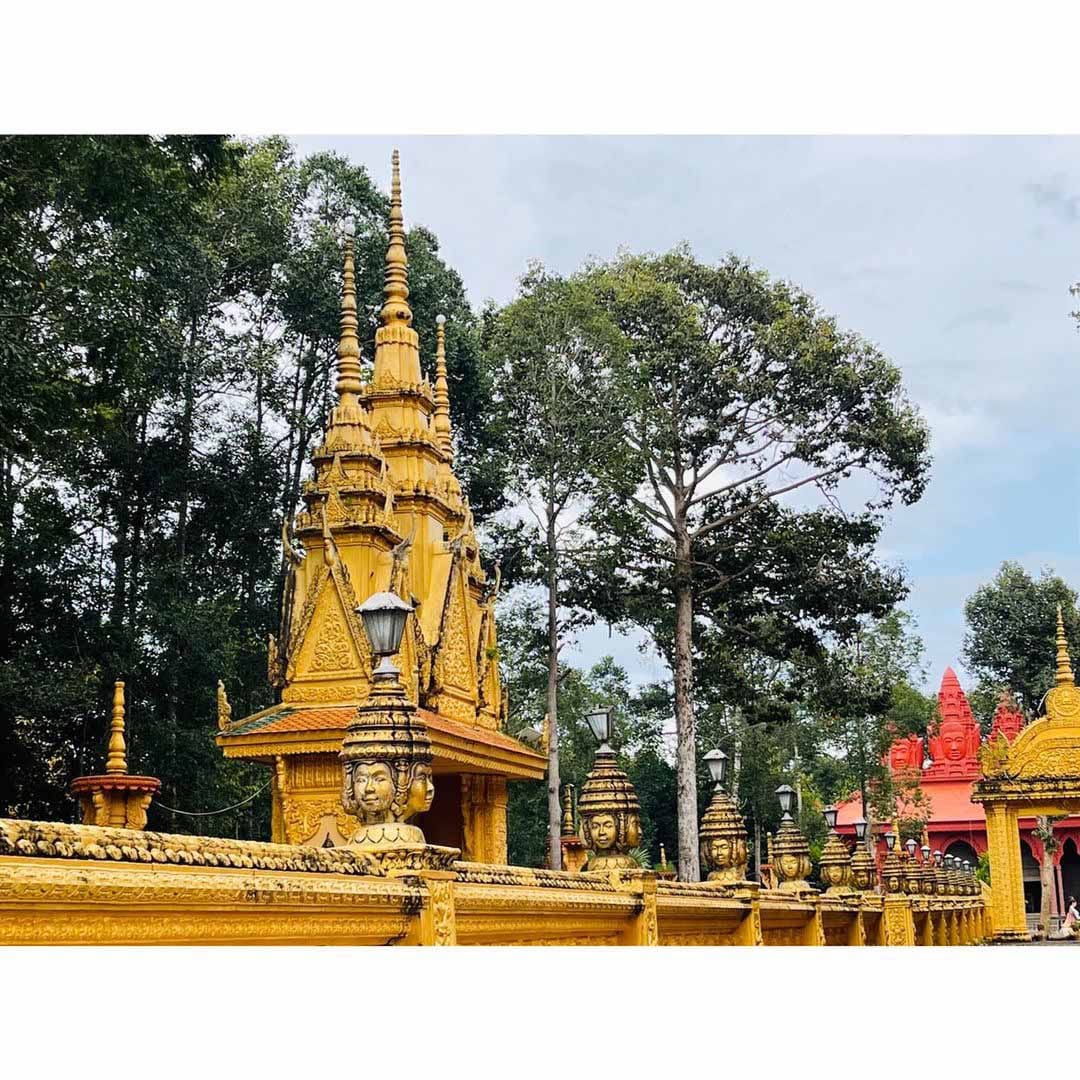
More than a million Khmer people live in the Delta, mostly in Tra Vinh, Soc Trang and An Giang. Their Theravada Buddhist pagodas are not only places of worship but schools, community halls and festival grounds. Traditionally, many young Khmer men spend time as novice monks to learn Buddhist teachings and the Khmer script.
3. Ok Om Bok and the Ghe Ngo boat races
During the full moon of the 10th lunar month, Khmer families celebrate Ok Om Bok to thank the Moon God for the harvest. They float lanterns, eat flattened young rice (cốm dẹp) and, in Soc Trang, cheer on teams racing long, brightly painted ghe ngo boats with dozens of rowers each.
4. Chôl Chnăm Thmây, the Khmer New Year
In mid-April, Khmer communities celebrate their New Year with pagoda visits, sand mountains, offerings to monks and plenty of water splashing to wash away the old year.

5. Đờn ca tài tử and cải lương
Đờn ca tài tử is a form of amateur chamber music born in Southern Vietnam, played on instruments like the moon-shaped lute and sung at family gatherings. UNESCO recognized it as Intangible Cultural Heritage in 2013. It also gave birth to cải lương, the emotional reformed opera loved across the South.
6. Food as hospitality
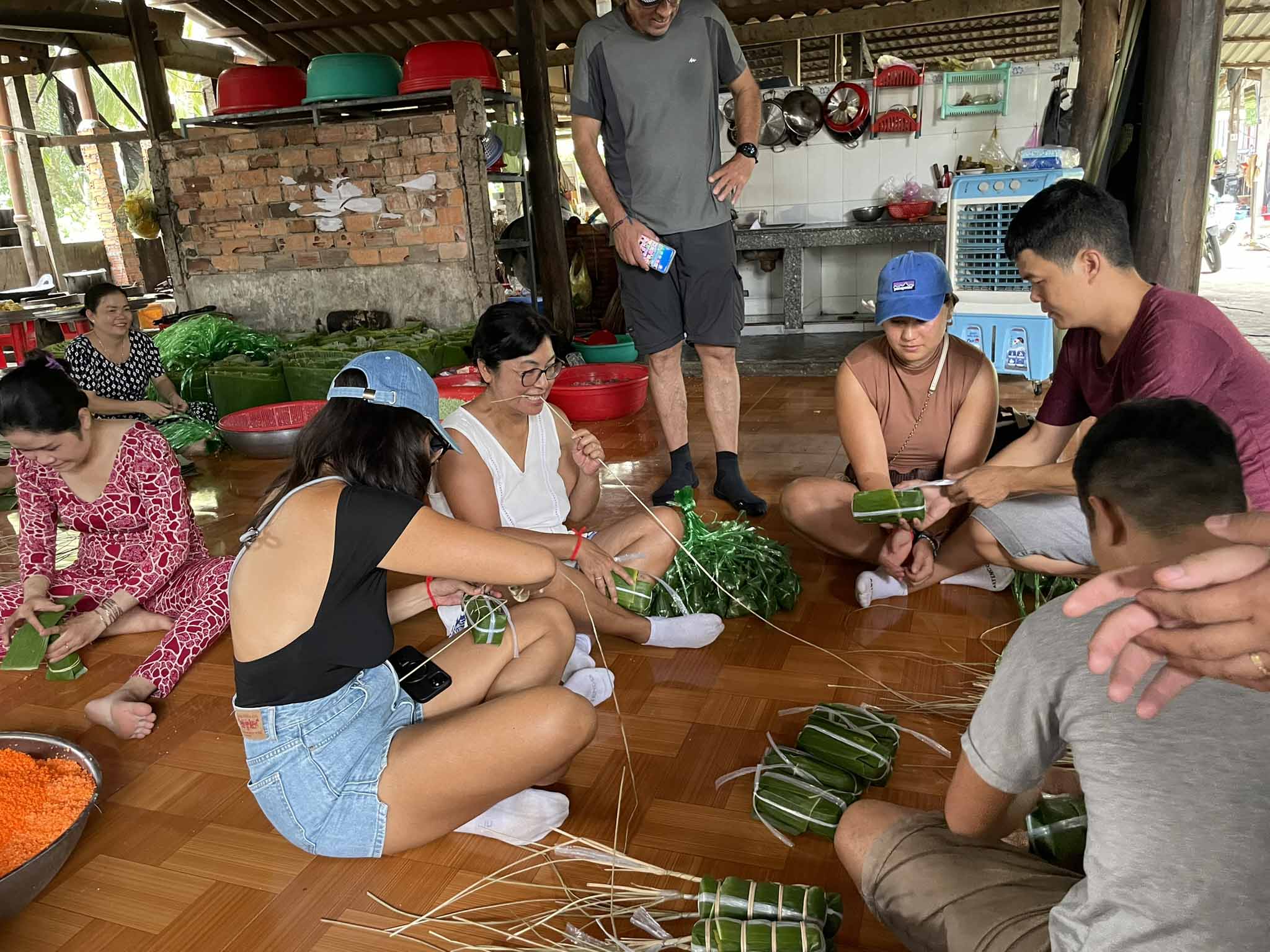
In the Delta, refusing food is almost impossible. Expect to be offered fruit, tea, rice wine and whatever is cooking. Local favorites include crispy bánh xèo pancakes, Khmer bún nước lèo noodle soup, lẩu mắm fermented fish hotpot and snakehead fish grilled in straw.
7. Hammocks and coffee
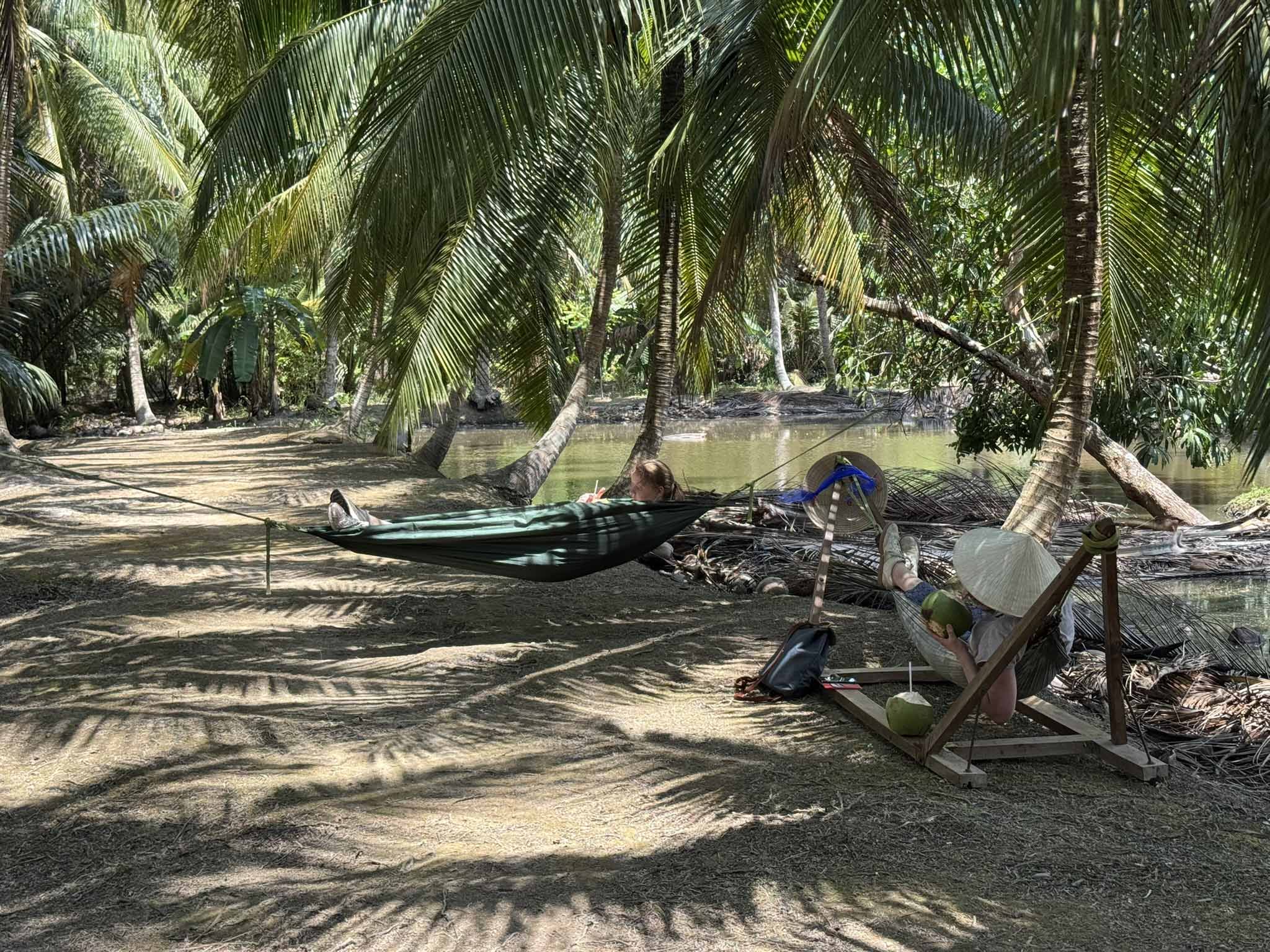
Hammock cafés are a cornerstone of Mekong Delta culture. Farmers, drivers and students stop for an iced coffee, swing for a while and chat with strangers. Join them: it is the quickest way to slow down to Delta time.
8. Religions born in the Delta
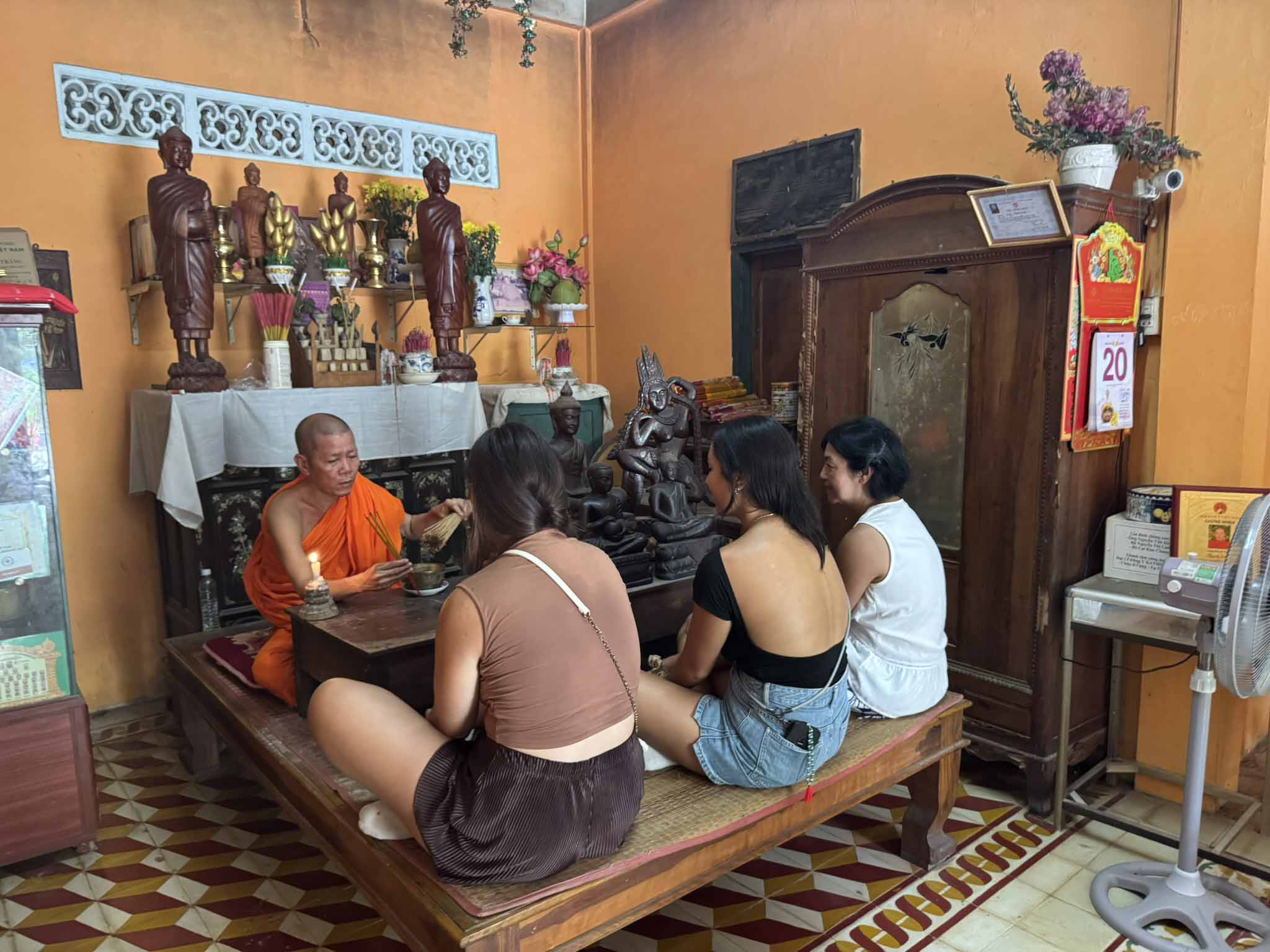
The Delta is a land of spiritual creativity. Hòa Hảo Buddhism was founded in An Giang in 1939 and still has more than a million followers. Cao Đài temples are common. And in Ben Tre, a mystic known as the Coconut Monk once founded a small religion on Phoenix Island, where followers reportedly lived on coconuts.
9. Chinese assembly halls and Guan Yu
Chinese communities built ornate assembly halls in Delta towns. Many are dedicated to Guan Yu, the red-faced god of loyalty, and locals still come to ask him for guidance by shaking bamboo fortune sticks.
The iconic look: áo bà ba and khăn rằn
The Delta’s traditional outfit is the áo bà ba, a simple, loose silk or cotton shirt with trousers, perfect for heat and work in the fields. Add a khăn rằn, the black-and-white checkered scarf, and you have the classic image of the Southern countryside.
Etiquette tips for experiencing Mekong Delta culture
- Dress modestly and remove shoes when entering pagodas and homes.
- Do not touch anyone’s head, and avoid pointing your feet at people or altars.
- Women should not touch monks or hand items to them directly.
- Accept food and drink with both hands, and try at least a little.
- Ask before photographing people, especially at religious ceremonies.
Experience Mekong Delta culture with us
The best way to understand the Delta is to share a meal, a hammock and a story with the people who live here. Our 3 day Mekong Delta tour and Tra Vinh Khmer heart tour take you into villages and pagodas most travelers never see. Planning your trip? Start with our Mekong Delta travel guide.
Mekong Delta culture FAQs
What is the Mekong Delta known for culturally?
Floating markets, Khmer pagodas, đờn ca tài tử music, generous hospitality and a cuisine built on rice, fish and tropical fruit.
Where can I see Khmer culture in Vietnam?
Tra Vinh, Soc Trang and An Giang have the largest Khmer communities and the most beautiful Theravada pagodas.
When is the best time to see Mekong Delta festivals?
Mid-April for Khmer New Year, and October or November (10th lunar month) for Ok Om Bok and the Ghe Ngo boat races.
Read next: Mekong Delta history and the people of the Mekong Delta. You can also learn more about đờn ca tài tử on Wikipedia.